













Summer Solar: Maximize Self-Consumption When Production Peaks
-
Seasonal Solar Tips
-
solar self-consumption
-
maximize solar usage
-
summer solar production
Here's the frustrating paradox of summer solar: your system produces more electricity than any other time of year, but you might actually be benefiting less from it than you do in spring or autumn.
The reason is simple. Peak production happens between 10am and 3pm. Peak consumption happens between 6pm and 10pm. In summer, that gap widens — longer days mean more midday surplus, while your evening habits don't change. The result? You're exporting cheap kilowatt-hours during the day and buying expensive ones back at night.
If your feed-in tariff pays you the equivalent of $0.05–0.08 per kWh for exports but you're buying evening electricity at $0.14–0.18, every kilowatt-hour you fail to self-consume costs you the difference. On a 10kW system producing 45–55 kWh per day in summer, a self-consumption rate of just 35% means you're using only 16–19 kWh directly. The remaining 26–36 kWh gets exported at a loss — or in markets with zero-export rules, gets curtailed entirely.
This article is about closing that gap. Not with one silver bullet, but with a stack of strategies that compound together.
What Self-Consumption Actually Means (And Why It Matters More in Summer)
Self-consumption ratio is the percentage of your solar production that you use directly in your home, rather than sending to the grid. It's different from self-sufficiency, which measures what percentage of your total consumption comes from solar.
In winter or rainy season, self-consumption is often naturally high — you produce less, so most of it gets used immediately. The problem disappears because there's barely any surplus.
Summer flips this. A 10kW system in a tropical climate might produce 50 kWh on a clear day. If your daytime base load is only 8–12 kWh (fridge, standby devices, maybe one air conditioner), that leaves 38–42 kWh looking for somewhere to go. Without intervention, it goes to the grid — at a fraction of what you'd pay to buy it back tonight.
The financial impact is significant. At a typical Southeast Asian residential rate structure, the spread between export value and import cost means every self-consumed kWh is worth 2–3x more than an exported one. On a system producing 50 kWh/day with 35% self-consumption versus 80% self-consumption, the annual revenue difference can exceed $800–1,400 — without adding a single panel.
Strategy 1: Load Shifting — Use Power When You Make It
The simplest and cheapest way to increase self-consumption is to move your heavy loads into solar hours. No equipment needed — just behavioral changes and timer settings.
The big three loads to shift:
Washing machine and dryer. A typical wash cycle draws 500–2,000W for 1–2 hours. Set it to run at 10am instead of 8pm. If your machine has a delay timer, program it the night before. Annual impact: 400–800 kWh shifted to solar.
Dishwasher. Same principle. Run it after lunch instead of after dinner. 300–500 kWh per year shifted.
Water heater. If you have an electric tank water heater, put it on a timer to heat between 11am and 2pm. The tank stores thermal energy — you're essentially using your hot water tank as a free thermal battery. This alone can shift 800–1,500 kWh per year in a typical household.
The less obvious shifts:
Pre-cool your house. Run air conditioning aggressively from 11am to 3pm — drop the temperature 2–3°C below your normal setting. Then let it coast through the evening on residual cooling. A well-insulated home can maintain comfort for 2–4 hours after the AC reduces output. You're converting midday solar surplus into stored "coolth."
Pool pump. If you have a pool, its filtration pump typically runs 6–8 hours daily drawing 750–1,500W. Schedule it entirely within solar hours. That's 4.5–12 kWh per day — a massive chunk of potential self-consumption.
EV charging. If you have an electric vehicle or plug-in hybrid, daytime charging at home during solar hours is one of the single biggest self-consumption boosters available. A typical 7kW home charger running for 4 hours during peak solar absorbs 28 kWh — potentially consuming your entire daily surplus in one shot.
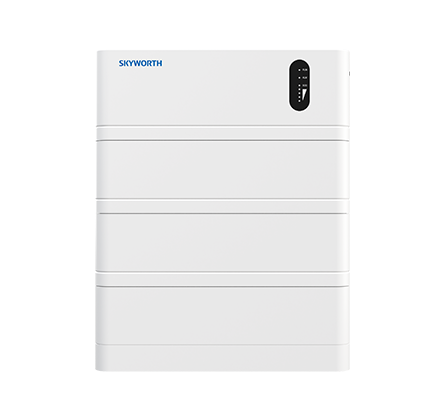
Strategy 2: Battery Storage — Capture Midday, Use at Night
Load shifting has limits. You can't always be home. Appliances have fixed cycles. Some loads only make sense in the evening. This is where battery storage bridges the gap.
A properly sized battery captures surplus production during the day and discharges it during evening peak hours — when grid electricity costs the most. The key is sizing it correctly for summer conditions:
| Daily surplus (summer estimate) | Recommended battery size | Expected self-consumption boost |
|---|---|---|
| 10–15 kWh surplus | 5 kWh | +15–25% |
| 20–30 kWh surplus | 10 kWh | +25–40% |
| 30–40 kWh surplus | 15 kWh | +35–50% |
Note: oversizing your battery beyond your typical evening consumption wastes money. If your household uses 15 kWh between 6pm and 6am, a 20 kWh battery gives you no additional benefit over a 15 kWh unit — you'll never fill the extra capacity unless your usage pattern changes.
Strategy 3: Smart Export Control — Keep Every Watt Legal and Profitable
In many emerging solar markets, grid export is either prohibited, limited, or compensated at rates so low it's barely worth doing. If your system sends power to the grid when it's not allowed, you risk compliance issues, billing disputes, or forced disconnection.
Anti-reverse flow devices (also called zero-export limiters) solve this by monitoring grid current in real time and dynamically throttling your inverter output to match household load. When your consumption drops — say, the air conditioner cycles off — the device reduces inverter output within milliseconds, preventing any surplus from reaching the grid.
The critical spec to look for: response time. A device that responds in 2–3 seconds might still allow brief bursts of export that trip utility meters or monitoring systems. Sub-one-second response is the standard you want.
Without this technology in zero-export markets, your only option is to significantly undersize your system (wasting roof potential) or accept that surplus gets curtailed. With it, you can install a larger array, maximize self-consumption through the strategies above, and let the hardware handle compliance automatically.
Strategy 4: Time-of-Use Arbitrage — Work the Rate Schedule
If your utility offers time-of-use (TOU) pricing — and many Thai residential customers can opt into this — the math gets even more interesting.
Typical TOU structure in Thailand:
| Period | Hours | Rate |
|---|---|---|
| Off-peak | 10pm – 9am | ~2.6 baht/kWh |
| On-peak | 9am – 10pm | ~5.8 baht/kWh |
With solar plus battery, your strategy becomes: use solar directly during on-peak daytime hours, store surplus in battery, discharge battery during on-peak evening hours, and buy only off-peak grid power overnight at 2.6 baht. Your effective electricity cost plummets because you're never buying at 5.8 baht — you're either using free solar or cheap nighttime grid power.
The savings versus a flat-rate customer without solar can exceed 60–70% on total annual electricity costs.
Strategy 5: System Monitoring — You Can't Optimize What You Can't See
Every strategy above works better when you can actually see what's happening in real time. Where is your electricity going right now? How much surplus is being exported? Which loads are pulling power during off-solar hours? What's your actual self-consumption ratio this week versus last week?
Without this visibility, you're guessing. You might think your load-shifting efforts are working, but without data confirming it, you could be leaving thousands of baht on the table.
A proper energy management system shows you production, consumption, battery state, grid import/export, and self-consumption percentage — all in real time and with historical trending. It turns vague intentions into measurable results. Set a target — say, 75% self-consumption — and track it weekly. You'll quickly see which days fall short and what caused it.
Putting It All Together: A Realistic Summer Day
Here's what a well-optimized 10kW system looks like on a typical 50 kWh production day in Bangkok:
| Time | What's happening | kWh used from solar |
|---|---|---|
| 6am–9am | Low production, covers base load (fridge, fans) | 3–4 kWh |
| 9am–11am | Production ramps up, washing machine runs, EV starts charging | 8–10 kWh |
| 11am–3pm | Peak production: EV charging, water heater, pre-cooling AC, battery charging | 20–24 kWh |
| 3pm–6pm | Production drops, battery finishes charging, house coasts on pre-cooling | 8–10 kWh |
| 6pm–10pm | No production — battery discharges, covers evening cooking, TV, lights | 8–12 kWh (from battery) |
Total self-consumed (direct + battery): 47–60 kWh out of 50 kWh produced. Self-consumption rate: 94–100%. Grid export: near zero. Grid import: only overnight base load at cheap off-peak rates.
Compare this to an unoptimized system where nobody's home during the day, no battery, no load shifting: self-consumption might be 30–35%. Same panels, same sun, completely different financial outcome.
See It, Control It, Keep It
If this sounds like a lot to manage manually — it doesn't have to be. The right monitoring platform turns all of this into a set-and-forget system with real-time visibility when you want it.
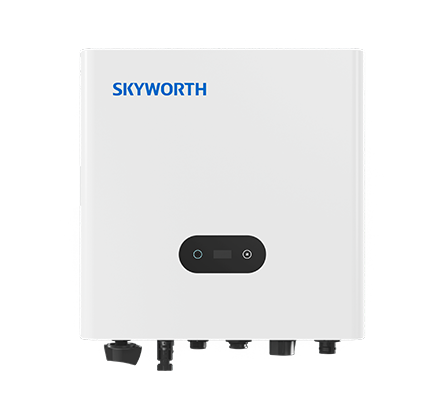
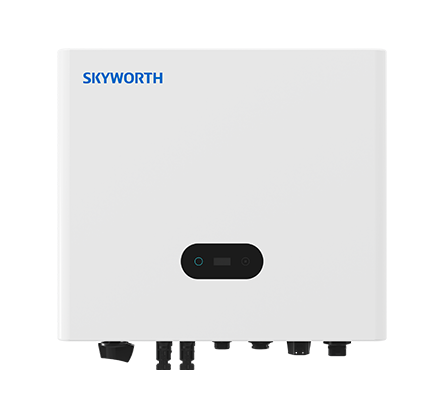
SKYWORTH Cloud provides exactly this: real-time energy flow visualization across solar, battery, household loads, and grid — with zero-delay data sync on phone and desktop. It tracks self-consumption ratio daily, monthly, and annually. Built-in AI diagnostics flag anomalies before they cost you production. And as a unified energy management system, it coordinates solar, storage, heat pumps, and EV chargers from one interface — making the multi-strategy approach described above practical rather than theoretical.
For homeowners in zero-export markets like Vietnam or Thailand, SKYWORTH pairs this monitoring with hardware-level anti-reverse flow technology that responds in under one second. It dynamically matches inverter output to real-time household load — watt by watt, instant by instant. When your air conditioner kicks on, output rises. When it cycles off, output drops before any surplus touches the grid. Fully compliant, fully automatic, and fully visible through the app.
The combination means you can install a larger array, maximize production, and trust that every kilowatt-hour either gets used immediately, stored for tonight, or held back from the grid — without you lifting a finger after setup.
Summer is when your system has the most to give. The question is whether you're set up to keep it.


Sign up to our latest blog
By signing up for our newsletter, you agree to the termsoutlined in our privacy policy. You can unsubscribe atany time.