













Myth: Solar Panels Don't Work on Cloudy Days
-
Myth Busters
-
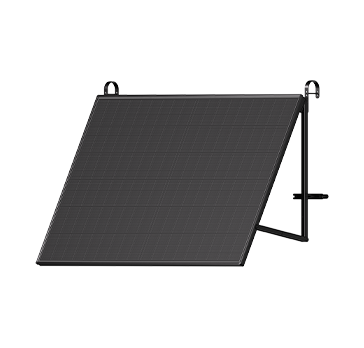
solar panel cloudy day
This one comes up in almost every conversation with someone considering solar for the first time. The logic seems airtight: solar panels need sun, clouds block sun, therefore clouds mean zero electricity. Case closed.
Except it's wrong. Not partially wrong — fundamentally wrong in how it frames the relationship between solar panels and light.
What Solar Panels Actually Respond To
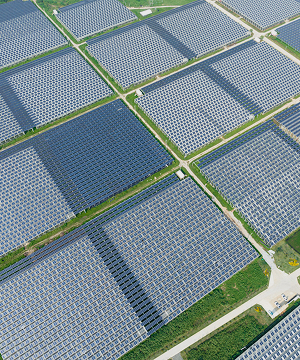
Solar panels don't need direct sunlight beaming down from a cloudless sky. They need photons — light particles. And photons reach your panels on cloudy days, rainy mornings, and even during the hazy grey skies that characterize monsoon seasons across tropical climates.
Solar radiation comes in two forms: direct radiation (the beam coming straight from the sun) and diffuse radiation (light scattered by clouds, moisture, and atmospheric particles in every direction). On a clear day, direct radiation dominates — maybe 80% direct, 20% diffuse. On an overcast day, it flips: nearly 100% diffuse.
Here's what matters: your panels convert both. They don't care whether the photon arrived in a straight line or bounced off three cloud layers first. A photon is a photon.
So How Much Do You Actually Lose?
Nobody's claiming cloudy days match sunny days. They don't. But the gap is far smaller than most people assume:
| Sky condition | Typical output vs clear day | What it feels like outside |
|---|---|---|
| Light/thin clouds | 60–80% | Bright but no sharp shadows |
| Moderate overcast | 25–50% | Grey sky, flat light, can still see blue patches |
| Heavy overcast / rain | 10–25% | Dark grey, raining or about to |
| Dense storm clouds | 5–15% | Almost dark, heavy downpour |
Even on the worst possible day — heavy storm, barely any light — your system is still producing something. Not much, but not zero. And those moderate overcast days that make up a large portion of rainy seasons? Your system is still churning out 25–50% of its rated capacity. Over a full month, those "bad" days add up to meaningful production.
The Germany Argument
If solar panels truly needed blazing sunshine to be worthwhile, someone forgot to tell Germany. For years Germany was the world's leading solar market by installed capacity — despite average annual sunshine hours roughly half of what tropical countries receive. German skies are overcast more than 60% of the year.
Yet German rooftop systems deliver reliable economic returns year after year. The reason is simple: annual production matters, not whether any single day was perfectly sunny. A system designed for your local climate — accounting for cloudy days, rainy weeks, and seasonal variation — will be sized and priced accordingly. The financial model already includes those grey days.
Tropical Rainy Seasons: Not What You Think
People in tropical climates often worry most about their 3–5 month rainy season. But tropical rain patterns are rarely "cloudy all day, every day" like a European winter. The typical pattern is: clear or partly cloudy mornings, afternoon thunderstorms lasting 1–3 hours, then clearing again.
This means your system often gets 4–6 hours of strong production before the rain arrives. Monthly production during rainy season typically drops 20–35% compared to dry season — not 80% as many people fear. Your panels are still working hard most of the morning and recovering quickly after the storm passes.
Modern Panels Handle Low Light Better Than Ever
Panel technology has evolved significantly. Today's monocrystalline PERC and TOPCon cells have much better low-light performance than the panels of even five years ago. They start generating earlier in the morning, continue later into the evening, and extract more energy from diffuse light conditions.
But panels alone don't tell the whole story. The inverter — the device converting DC panel output to usable AC power — plays an equally critical role in cloudy conditions. Specifically, how well its Maximum Power Point Tracking (MPPT) algorithm responds to rapidly changing irradiance as clouds pass overhead.
A slow or poorly tuned MPPT loses precious seconds re-optimizing every time a cloud shadow moves across your array. Multiply that by dozens of cloud transitions per hour on a partly cloudy day, and the cumulative loss is real.
How System Design Maximizes Cloudy-Day Harvest
Beyond panel choice, two design decisions dramatically affect how much energy you capture on low-light days:
DC oversizing (installing more panel capacity than your inverter's rated output). On a clear day, a 1.5:1 DC-to-AC ratio means your inverter clips the excess — you lose a small amount at peak. But on cloudy days, that extra panel capacity means your inverter still receives enough power to operate at or near full output even when irradiance drops 30–50%. The panels that seem "oversized" on sunny days are precisely right on cloudy ones.
Dual MPPT inputs. An inverter with two independent MPPT channels can optimize two different panel strings separately. If one section of your roof gets cloud shadow while another remains in light, dual MPPT ensures the shaded string doesn't drag down the unshaded one. Single-MPPT systems lose production in these partial-shading scenarios that happen constantly on partly cloudy days.
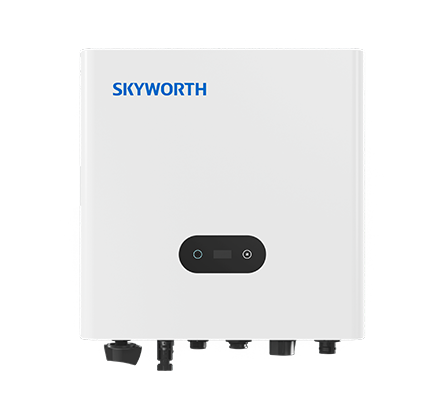
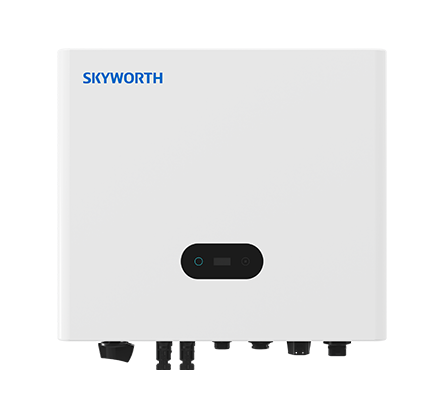
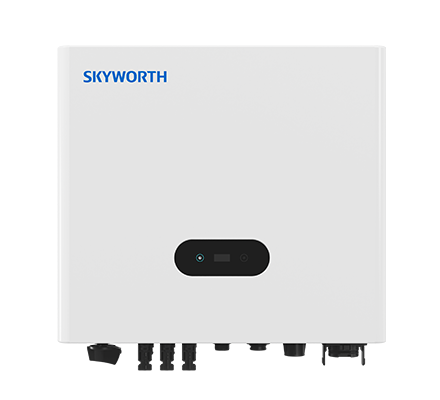
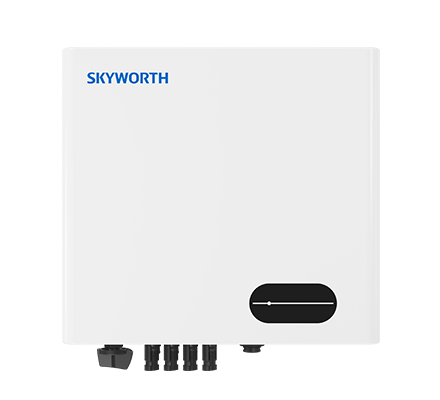
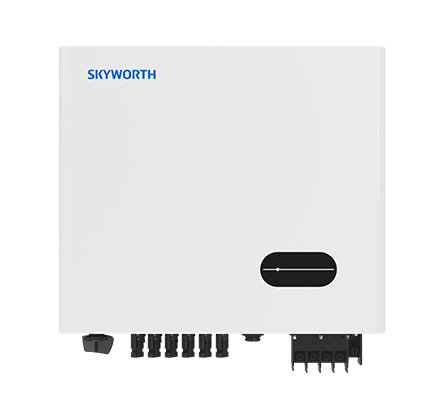
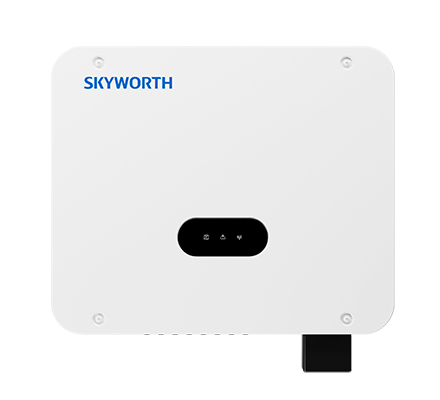
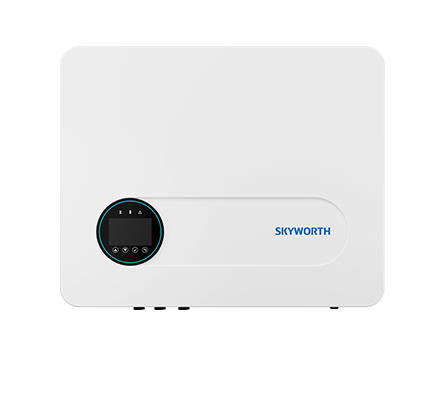
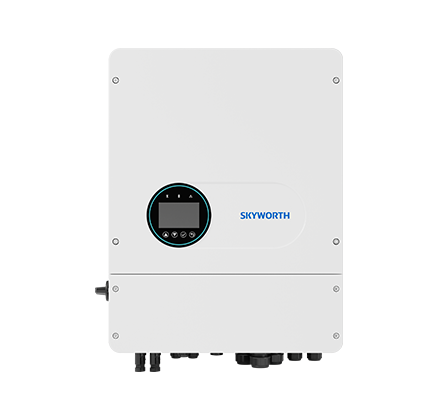
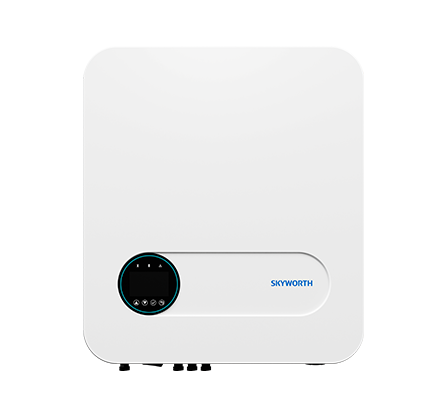
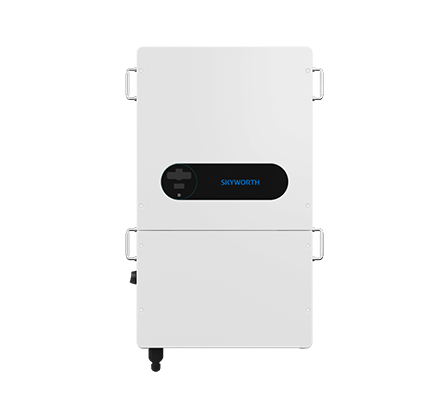
SKYWORTH inverters are built around both of these principles — supporting up to 1.5x DC oversizing with dual MPPT channels and peak conversion efficiency of 98.6%. In practical terms, this means your system squeezes more usable energy from every cloudy hour, every partially shaded morning, and every rainy season month. The design assumes imperfect conditions because that's what real weather looks like.
Explore SKYWORTH inverter specifications
The Bottom Line
Solar panels work on cloudy days. They work in the rain. They work during monsoon season. They produce less than on a perfect sunny day — obviously — but "less" is not "nothing," and over a full year, those cloudy-day kilowatt-hours compound into meaningful production and real savings.
The myth persists because it's intuitive. But solar economics aren't built on perfect days. They're built on annual totals — and annual totals include every grey morning, every afternoon thunderstorm, and every overcast week. A well-designed system accounts for all of it.


Sign up to our latest blog
By signing up for our newsletter, you agree to the termsoutlined in our privacy policy. You can unsubscribe atany time.